Source Offset Printing Paper Cutter for Card, Label, and Bill Printing
Find 30 offset printing paper cutter options with varying specifications like hydraulic drive, PLC control, and multi-color capabilities. Buyers can compare models such as SQZK and FM850, featuring cutting widths up to 168cm and touch screen interfaces for industrial applications.
Key considerations
Products List
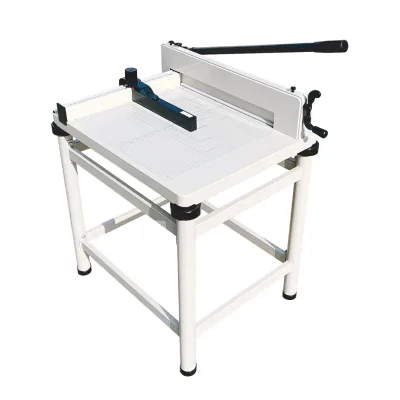


Paper & Cardboard Cross Cutting Machine
$90000.00 - $150000.00
Moq: 1
Dongguang County Daqi Packaging Machinery Manufacturing Co., Ltd.
Comprehensive Sourcing Guide
Strategic Sourcing Guide for Offset Printing Paper Cutters
Understanding the Technical Landscape of Industrial Cutting Solutions
When sourcing equipment for offset printing environments, the distinction between manual and automated cutting systems is paramount. The market presents a diverse array of machinery, ranging from simple manual paper cutters to highly sophisticated computerized industrial units. A critical observation in the current supply landscape is the coexistence of products labeled as "Manually Paper Cutter" alongside machines described as "Automatic" or "Computerized." This variance indicates that buyers must carefully scrutinize product descriptions to ensure the automation level matches their production volume requirements.
For high-speed offset operations, the integration of advanced control systems is essential. Modern industrial cutters often feature a "Full Touch Screen" interface, with observed specifications ranging from 16-inch to 19-inch displays. These interfaces are frequently paired with "Siemens PLC" control centers, ensuring precise synchronization between the cutting mechanism and the backgauge. The driven type of these machines is predominantly hydraulic, providing the necessary force for clean cuts on heavy stock. Furthermore, the classification of these units often includes "Single-blade Cutter" configurations, utilizing "HSS" (High-Speed Steel) blades which are critical for maintaining sharpness during prolonged industrial use.
The physical capabilities of these machines vary significantly. Buyers should expect to encounter models with maximum cutting widths ranging from 92cm up to 188cm, with specific standard sizes often listed as 92, 115, 130, 137, 168, and 188cm. The maximum cutting height is a fixed parameter in many models, often observed at 16.5cm or 16.5 inches, which dictates the thickness of the paper stack the machine can handle. Speed is another critical variable; while some units operate at a backgauge speed of 32 meters per minute, others in the same category may reach 38 meters per minute. The cutting speed itself, measured in cycles per minute, can be observed at 46 times per minute for specific high-performance models.
Compliance Standards and Certification Verification
In the industrial machinery sector, compliance with international safety and operational standards is non-negotiable. The primary standard observed in the current product listings is the CE mark, which indicates conformity with health, safety, and environmental protection standards for products sold within the European Economic Area. However, buyers must exercise caution. While "CE" is listed as a standard in the provided data, it is categorized as a low-confidence background fact in some contexts. Therefore, procurement teams should not assume that every listed product automatically possesses valid certification without requesting current, verifiable documentation from the supplier.
Beyond the CE mark, the product data references specific model numbers and standard codes that serve as identifiers for compliance. For instance, models such as "SQZK92/115/130/137/168/188" and "SQZK130S16" appear to follow a naming convention that correlates with specific size standards. When evaluating a supplier, buyers should verify that the "prod_standard" listed on the product page matches the actual physical unit being shipped. The data also mentions standards like "92/115/130/137/168/188cm," which likely refer to the cutting width capacities rather than safety certifications. It is vital to distinguish between dimensional specifications and regulatory certifications.
Buyers should also be aware that the origin of the machinery plays a role in compliance. The majority of the observed products originate from "Zhejiang, China," a major manufacturing hub. While this region produces a high volume of industrial equipment, the specific regulatory compliance of each batch can vary. The "prod_standard" field often lists the model number itself (e.g., "SQZK") alongside dimensional data, suggesting that the standard is tied to the model's design rather than a third-party safety body. Consequently, verification of the CE certification status must be a proactive step in the sourcing process, requiring the supplier to provide a valid certificate of conformity for the specific model and serial number.
Cost Drivers and Pricing Dynamics in the Market
The pricing structure for offset printing paper cutters is highly volatile, reflecting the wide spectrum of capabilities available in the market. The observed price range in the current dataset spans from $0.10 to $150,000 USD. This extreme variance is not indicative of a single product type but rather a reflection of the entire category, from basic manual units to fully automated, computerized industrial systems. A manual paper cutter with a simple hydraulic drive will naturally command a lower price point compared to a computerized unit featuring a 19-inch touch screen, Siemens PLC, and high-speed backgauge capabilities.
Several factors drive the cost of these machines. First, the level of automation is a primary cost determinant. Machines labeled as "Automatic" or "Computerized" with multi-language support (ranging from "Dozens of Languages" to "Eight Languages") require more complex software and hardware, increasing the manufacturing cost. Second, the power specifications influence pricing. Units with motor powers specified as 7.5 kW or 10 HP, often associated with high-speed offset presses, represent a significant investment in energy efficiency and cutting force. Third, the materials used, such as HSS blades and the structural integrity required for a 168cm cutting width, add to the overall cost.
The Minimum Order Quantity (MOQ) also impacts the effective cost per unit. The observed MOQ range is between 1 and 10,000 units. For buyers seeking a single machine for a specific facility, an MOQ of 1 is ideal. However, if a buyer is looking to equip a large printing hub or a distribution network, an MOQ of 10,000 might be relevant for bulk purchasing agreements, though this is less common for large capital equipment. The "Customization" attribute being available suggests that buyers can negotiate pricing based on specific requirements, such as custom packing (e.g., "Fumigated Wooden Case" vs. "Wooden Pallet") or specific voltage requirements (e.g., 380V).
Typical Applications and Operational Versatility
The applications for these paper cutters extend beyond simple trimming. The product data explicitly lists usage scenarios including "Card Printer," "Paper Printer," "Label Printer," "Bill Printer," and "Tube Printer." This versatility indicates that the machinery is designed to handle a wide variety of substrates, from thin paper stocks used in billing and labeling to thicker materials used in card printing. The "Function" attribute further clarifies that these machines are capable of "Offset Print for Cans/Bottles," suggesting a broader industrial application that may involve pre-press or post-press processing for various packaging materials.
The "Printing Speed" attribute, listed as "Type: Web High Speed offset Press," implies that these cutters are often integrated into high-speed production lines. In such environments, the machine must keep pace with the offset press, which may operate at speeds requiring a backgauge speed of up to 38 meters per minute. The "Color & Page" attribute, noted as "Multi-Colour," and the "Printing Color" specification of "Six-color Machine," suggest that these cutters are designed to handle multi-colored prints without compromising the registration or edge quality.
Furthermore, the "Usage" classification highlights the machine's role in diverse printing sectors. Whether producing labels for consumer goods, bills for financial institutions, or cards for identification, the cutter must maintain high precision. The "Type: Industrial Cutter" designation confirms that these are not hobbyist tools but heavy-duty equipment intended for continuous operation in commercial printing facilities. The ability to handle "Tube Printer" applications suggests that the machinery may also be adapted for cylindrical or specialized printing formats, adding to its operational flexibility.
Supplier Evaluation and Geographic Considerations
When evaluating potential suppliers, the geographic origin of the product is a key data point. The majority of the observed products originate from "Zhejiang, China," a region known for its robust manufacturing infrastructure. However, the presence of multiple model numbers and varying specifications suggests a fragmented supply chain with numerous manufacturers. Buyers should not rely on a single brand name, as the data shows "hollan" as a brand name but does not confirm it as the exclusive or dominant player in the market.
Supplier evaluation should focus on the consistency of product attributes. For instance, if a supplier lists a model with a "Full Touch Screen" of 19 inches, but the actual product delivered has a 16-inch screen, this indicates a discrepancy in quality control. Buyers should verify the "prod_model" and "prod_standard" against the physical unit. The data shows models like "FM850," "HPM," and "SQZK" series, each with distinct specifications. A reliable supplier will provide clear documentation linking the ordered model number to the specific technical capabilities, such as the "Max. Cutting Width" or "Cutting Speed."
Packing standards are another critical evaluation metric. The data lists various packing methods, including "Wooden Pallet," "Fumigated Wooden Case," and "Export Standard Wooden Case." The choice of packing can affect the safety of the equipment during transit and the ease of installation. A supplier offering "Fumigated Wooden Case" packing demonstrates adherence to international phytosanitary standards, which is crucial for international shipping. Buyers should confirm that the packing method matches the destination country's import requirements to avoid delays or additional costs.
Quality Control and Long-Term Procurement Strategy
Ensuring long-term reliability requires a rigorous quality control strategy. The "Blade Material" is specified as "HSS," which is a standard for durability, but the actual performance depends on the heat treatment and maintenance protocols. Buyers should inquire about the blade replacement cycle and the availability of spare parts. The "Driven Type" being hydraulic means that maintenance of the hydraulic system is essential for consistent performance. Regular checks on the "Max. Backgauge Speed" and "Cutting Speed" can help identify wear and tear before it affects production quality.
The "Control Center" being a "Siemens PLC" is a significant advantage for long-term procurement, as Siemens components are widely supported and have a long lifecycle. However, buyers must verify the software version and compatibility with future updates. The "Language" support, ranging from eight to dozens of languages, is a valuable feature for international operations, but it also implies a complex software architecture that requires skilled operators. Training programs should be part of the procurement package to ensure the workforce can fully utilize the machine's capabilities.
Finally, the "Customization" attribute offers a pathway for long-term value. If a buyer requires specific modifications to the standard model, such as a different voltage or a unique packing configuration, the supplier's ability to deliver these customizations efficiently is a key performance indicator. The "Color" of the machine, often listed as "Gray" or "White&Black," is a minor aesthetic detail but can be relevant for facility standardization. By focusing on the technical specifications, compliance, and supplier reliability, buyers can secure a paper cutter that meets their immediate needs while ensuring long-term operational efficiency.
Comparative Analysis of Key Specifications
To assist in the decision-making process, the following table summarizes the key technical specifications observed in the market for offset printing paper cutters. This comparison highlights the variance in capabilities that buyers must navigate.
| Feature | Low-End / Manual Variant | High-End / Computerized Variant |
|---|---|---|
| Drive Type | Manual / Hydraulic | Hydraulic / Computerized |
| Control System | Basic Mechanical | Siemens PLC / Full Touch Screen |
| Screen Size | N/A or Small | 16-inch to 19-inch |
| Cutting Width | 92cm - 130cm | 137cm - 188cm |
| Cutting Speed | Variable / Lower | Up to 46 times/Min |
| Backgauge Speed | ~32 m/Min | Up to 38 m/Min |
| Blade Material | HSS | HSS (High Precision) |
| Power Source | Standard | 380V / 7.5-10 HP |
| Packing | Wooden Pallet | Fumigated Wooden Case |
| Certification | CE (Verify) | CE (Verify) |
This table illustrates that while the core function remains the same, the operational efficiency and integration capabilities vary significantly. Buyers should align their selection with their specific production volume and automation requirements.
FAQs
What automation levels are available for offset printing paper cutters?
Both manual and automatic computerized models are available for offset printing paper cutters. Buyers must verify the specific driven type, such as hydraulic, and check if the unit features a full touch screen interface ranging from 16 to 19 inches for precise operation.
Which cutting widths are standard for industrial offset printing cutters?
Standard maximum cutting widths range from 92cm up to 188cm depending on the model series. Common specifications include sizes like 92, 115, 130, 137, 168, and 188cm, allowing selection based on the specific sheet size requirements of the printing facility.
Can these machines handle multi-color offset printing applications?
Yes, these industrial cutters are designed for multi-color applications including six-color machines. They support usage for card, paper, label, bill, and tube printing while maintaining precision for high-speed web offset press operations with various color configurations.
What is the typical motor power for high-speed offset cutting units?
High-speed offset cutting units typically feature motor powers of 7.5 kW or 10 HP. This power rating supports the hydraulic driven type and ensures the machine can maintain cutting speeds of up to 46 cycles per minute for heavy industrial loads.
How is the control system configured in computerized paper cutters?
Computerized models utilize a Siemens PLC control center paired with a full touch screen interface. These systems support multiple language options, ranging from eight to dozens of languages, ensuring operators can manage the backgauge speed and cutting parameters efficiently.
What blade material is used for industrial offset printing cutters?
Industrial offset printing cutters typically use High-Speed Steel (HSS) for their blades. This material is selected for its durability and ability to maintain sharpness during prolonged use in single-blade cutter configurations for clean cuts on various paper stocks.
Are customization options available for offset printing paper cutter specifications?
Customization is available for offset printing paper cutter specifications including packing and voltage requirements. Buyers can request specific packing methods like fumigated wooden cases and verify voltage standards such as 380V to ensure compatibility with their local power infrastructure.